


Best Snorkeling and Diving Spots in Corfu Island

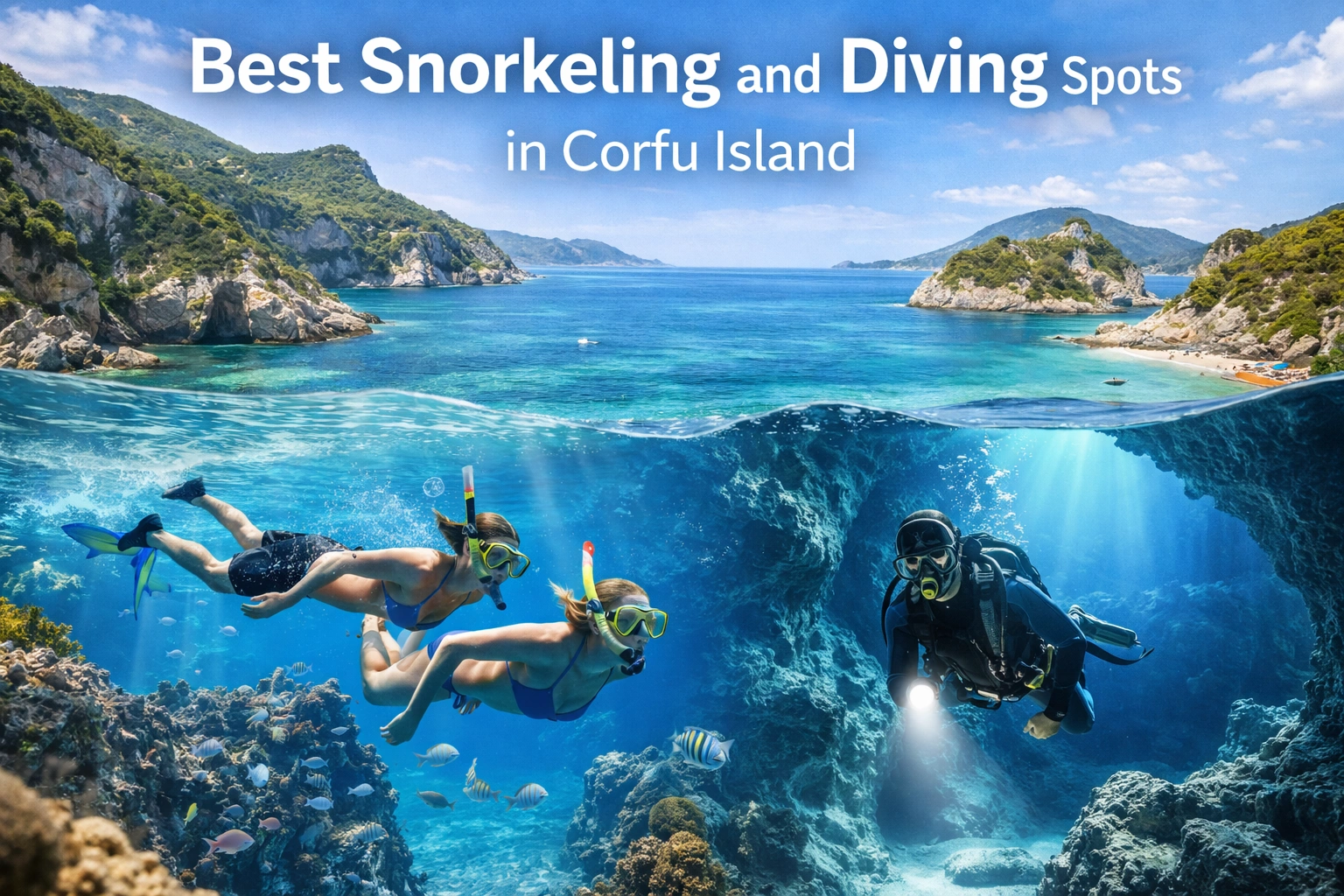
Corfu Island is one of the best destinations in Greece for snorkeling and diving, thanks to its crystal-clear Ionian waters, rich marine life, and diverse underwater landscapes. From shallow coves ideal for beginners to deeper sites with caves and reefs for experienced divers, Corfu offers a wide range of sea experiences suitable for all skill levels.
This guide explores the best snorkeling and diving spots in Corfu Island, explaining what makes each location special and who it is best suited for.
Why Corfu Is Ideal for Snorkeling and Diving
Unlike many Greek islands with rocky and dry coastlines, Corfu is lush and green, and its seabed reflects this diversity. The island features:
- clear waters with excellent visibility, especially in summer
- rocky reefs, caves, and underwater cliffs
- calm bays ideal for snorkeling
- organized dive centers with certified instructors
The Ionian Sea is generally calmer than the Aegean, making Corfu a safer and more accessible destination for underwater activities.
Best Snorkeling Spots in Corfu
Paleokastritsa
Paleokastritsa is widely regarded as the top snorkeling spot on the island. Its turquoise bays, rocky formations, and sea caves provide excellent visibility and abundant marine life. Snorkelers can see small fish, sea urchins, and colorful rock formations just a few meters from shore.
Best for: beginners and intermediate snorkelers
Conditions: calm waters, especially in the morning
Agios Gordios
Located on the west coast, Agios Gordios combines sandy seabeds with rocky areas ideal for snorkeling. The gradual depth makes it accessible, while the surrounding cliffs attract marine species.
Best for: casual snorkeling and families
Conditions: best on low-wind days
Porto Timoni
This unique double beach near Afionas offers two bays with different underwater conditions. Snorkelers can explore rocky sides where fish gather and enjoy exceptional water clarity.
Best for: confident swimmers
Conditions: clear water, some currents on windy days
Kassiopi Coast
The northeastern coastline around Kassiopi features small coves and rocky seabeds. Snorkeling here reveals schools of fish and interesting underwater rock formations.
Best for: intermediate snorkelers
Conditions: calm seas, especially in summer
Best Diving Spots in Corfu
Paleokastritsa Caves
For divers, Paleokastritsa is equally impressive below the surface. The underwater caves and walls are suitable for both beginners and advanced divers, depending on depth.
Depth: 5–30 meters
Highlights: caves, walls, marine biodiversity
Colovri Reef
One of Corfu’s most famous dive sites, Colovri Reef is known for its rich marine life and coral formations. Divers often encounter octopus, moray eels, and schools of fish.
Depth: 10–25 meters
Best for: certified divers
Nissaki Reef
Located on the northeast coast, Nissaki Reef offers calm conditions and excellent visibility. It is often used for training dives but still provides rewarding scenery.
Depth: 6–18 meters
Best for: beginners and training dives
Capo Drastis Area
Although better known for its dramatic coastline, the waters around Capo Drastis also offer interesting dive opportunities with underwater rock formations and clear visibility.
Depth: varies
Best for: experienced divers with guides
Snorkeling vs Diving in Corfu
Snorkeling in Corfu is ideal for travelers who want easy access and minimal equipment. Many of the best spots are accessible directly from the beach.
Diving, on the other hand, allows exploration of deeper caves, reefs, and marine ecosystems. Dive centers across the island offer:
- introductory dives
- certified courses
- guided dives for experienced divers
Both activities complement each other and can be enjoyed during the same trip.
Best Time for Snorkeling and Diving
- May to October: Best visibility and warm water temperatures
- June to September: Peak conditions with calm seas
- Early morning: Best time of day for clear water and minimal waves
Water temperatures range from 20°C in spring to around 26°C in summer.
Practical Tips for Underwater Activities
- Always check weather and sea conditions before entering the water
- Use reef-safe sunscreen to protect marine life
- Avoid touching marine organisms or removing shells
- For diving, choose licensed dive centers with experienced instructors
Respecting the environment ensures that Corfu’s underwater beauty remains preserved.
Frequently Asked Questions (FAQ)
Is Corfu good for beginners in snorkeling?
Yes. Many beaches have shallow, calm waters ideal for first-time snorkelers.
Do I need a license to dive in Corfu?
Yes, for independent diving. However, beginners can try diving through introductory programs without certification.
What marine life can I see?
Common sightings include small fish, octopus, sea urchins, starfish, and occasionally larger species.
Are there guided snorkeling tours?
Yes. Many operators offer guided snorkeling and boat excursions.
Is snorkeling better on the west or east coast?
Both offer great spots, but the west coast is known for clearer waters and dramatic formations.
Conclusion
Corfu Island is an exceptional destination for snorkeling and diving, offering something for every level of experience. From the calm, shallow bays of Paleokastritsa to the deeper reefs and caves explored by divers, the island’s underwater world is as captivating as its landscapes above water. For travelers who love the sea, exploring Corfu beneath the surface adds a whole new dimension to their visit.