

Hidden Villages and Local Experiences in Corfu Island

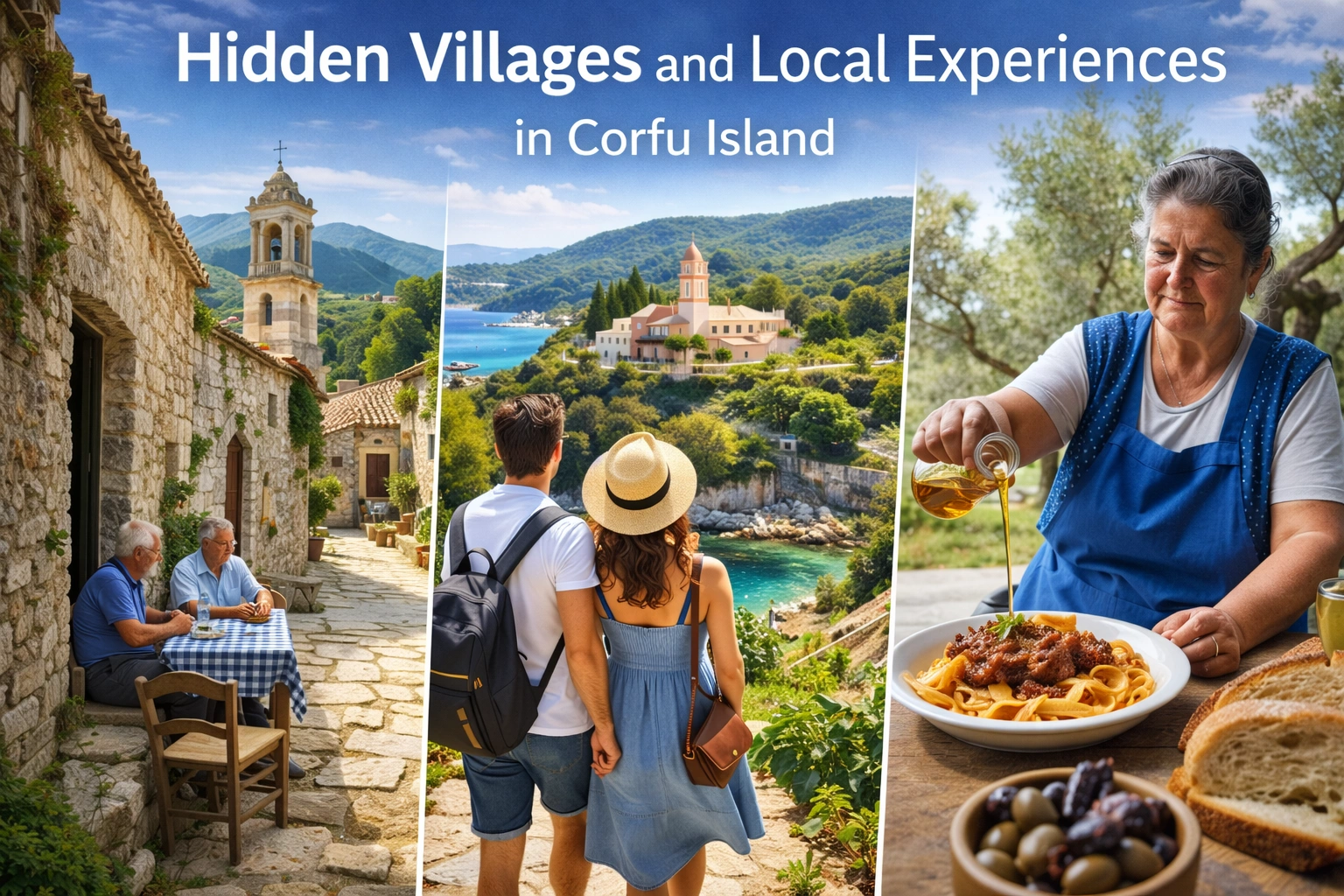
Beyond Corfu’s famous beaches and lively resorts lies a quieter, deeply authentic side of the island. Hidden villages, traditional crafts, and everyday local rituals reveal Corfu’s character far better than any postcard view. For travelers who want to experience Corfu like a local—at a slower pace and with genuine connections—these lesser-known places and experiences are essential.
This guide explores Corfu’s hidden villages and the local experiences that bring them to life.
Why Explore Corfu’s Hidden Villages?
Corfu’s interior and northern regions are dotted with villages that time seems to have gently passed by. Exploring them offers:
- Authentic Corfiot architecture and village life
- Traditional cuisine cooked for locals, not tourists
- Panoramic views, olive groves, and quiet countryside
- Encounters with residents who still follow age-old customs
For travelers seeking depth and meaning, these villages provide a richer understanding of the island.
Traditional Villages Worth Discovering
Old Perithia
One of Corfu’s oldest villages, Old Perithia sits on the slopes of Mount Pantokrator. Stone houses, narrow paths, and traditional tavernas create an atmosphere untouched by modern tourism. It is ideal for walking, photography, and enjoying local dishes in a peaceful setting.
Doukades
Located in central Corfu, Doukades is known for its Venetian-style buildings and relaxed village square. It’s a perfect stop after exploring nearby beaches, offering a glimpse into daily island life with small cafés and family-run tavernas.
Lakones
Perched above Paleokastritsa, Lakones offers dramatic views over the west coast. Its traditional houses and quiet streets make it a scenic and cultural contrast to the busy coastal areas below.
Sinarades
Sinarades combines local tradition with panoramic views of the Ionian Sea. The village museum provides insight into rural Corfiot life, making it a great cultural stop for curious travelers.
Local Experiences That Reveal the Real Corfu
Traditional Cuisine in Village Tavernas
Eating in a village taverna is one of the most authentic experiences in Corfu. Menus often feature dishes prepared according to family recipes, such as sofrito, pastitsada, and seasonal vegetable stews. Meals are slower, portions generous, and hospitality personal.
Olive Oil and Local Products
Olive trees dominate Corfu’s landscape. Visiting small producers allows travelers to learn about olive oil production and sample local products such as kumquat sweets, honey, and wine. These experiences offer insight into Corfu’s agricultural roots.
Walking and Nature Trails
Many hidden villages are connected by old footpaths used for centuries. Walking these routes reveals olive groves, chapels, and views rarely seen from the main roads. Spring and autumn are ideal seasons for this activity.
Religious Festivals and Panigyria
Village festivals are among the most genuine local experiences in Corfu. Music, food, and dancing bring entire communities together. Visitors are often welcomed warmly, making these events a unique way to connect with local culture.
How to Access Hidden Villages
Reaching Corfu’s hidden villages is easier than many expect:
- Car rental: Offers maximum flexibility and access to remote areas
- Private transfers: Ideal for travelers who want comfort and local knowledge
- Guided tours: Provide historical and cultural context
Public buses generally serve larger villages, but smaller ones are best accessed by car or private transport.
Best Time to Explore Villages and Local Life
- Spring (April–June): Mild weather, green landscapes, and fewer crowds
- Autumn (September–October): Warm temperatures, harvest season, and cultural events
- Summer: Possible, but best visited early morning or late afternoon
Avoid midday heat, especially in inland villages.
Why These Experiences Matter
Hidden villages and local experiences add depth to a Corfu holiday. They encourage slower travel, cultural respect, and meaningful interactions. Instead of simply visiting Corfu, travelers become participants in its living traditions.
For many visitors, these moments—sharing a meal, chatting with a local shop owner, walking a quiet village path—become the most memorable parts of their journey.
Frequently Asked Questions (FAQ)
Are Corfu’s hidden villages easy to visit?
Yes. While some require a car or private transfer, distances are short and roads are generally accessible.
Do locals speak English in villages?
Basic English is common, but even without it, locals are friendly and welcoming.
Is it respectful to visit village festivals?
Yes. Visitors are welcome, provided they respect local customs and traditions.
Are village tavernas expensive?
No. Prices are often lower than in tourist resorts, with generous portions and homemade food.
How many villages should I visit?
Two to four villages during a stay allow enough time to enjoy each without rushing.
Conclusion
Exploring hidden villages and local experiences transforms a trip to Corfu into something far more meaningful. Away from crowded beaches and resorts, travelers discover a quieter island shaped by tradition, hospitality, and everyday life. For those willing to slow down and look beyond the obvious, Corfu offers a deeply rewarding cultural journey that lingers long after the trip ends.