

Corfu Byzantine Museum – Analytical Guide

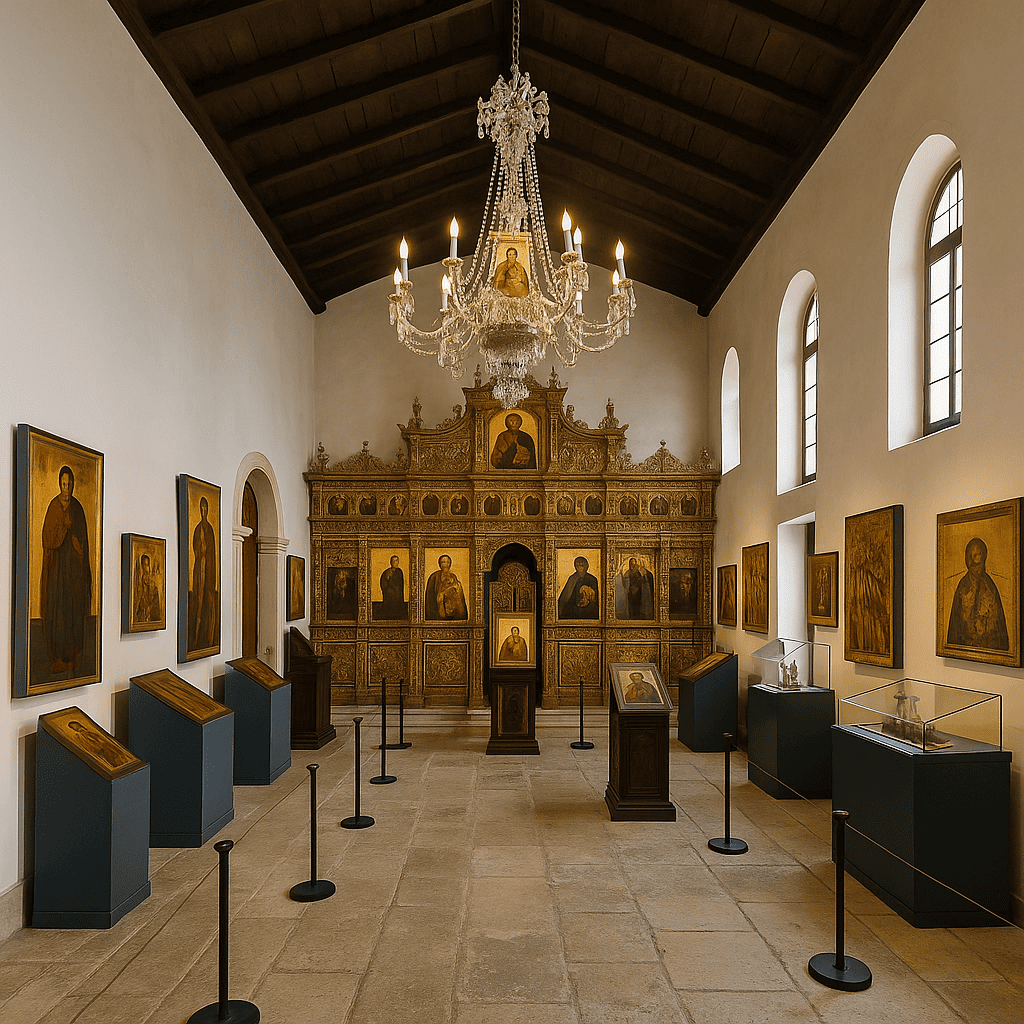
The Byzantine Museum of Corfu, also known as the Antivouniotissa Ecclesiastical Museum, is a hidden gem nestled within the Old Town of Corfu. More than just a repository of religious icons, it is a testament to the spiritual, artistic, and historical continuity of Corfu through the Byzantine and post-Byzantine eras. Housed in one of the oldest and most beautiful churches of the island, the museum offers visitors a rich insight into the religious art and heritage of the Ionian world.
This guide explores its architectural context, its collections, historical significance, and why it’s a must-visit for anyone interested in Byzantine and Orthodox art.
Location & Architectural Setting
The museum is housed in the Church of the Virgin Mary of Antivouniotissa, located in the Campiello district of Corfu’s Old Town — an area marked by Venetian alleyways, tall stone buildings, and timeless charm. The church itself dates back to the 15th century, and it is one of the finest surviving examples of the Heptanesian basilica type with a high wooden ceiling and a large nave.
Built by noble families of Corfu, the church was later converted into a museum in the 1970s, when its founders and heirs donated it — along with its sacred relics — to the Greek state. Today, the structure retains much of its original design, including the wooden carved iconostasis, stone floor, and beautiful frescoes, enhancing the authenticity of the museum experience.
Overview of the Collection
The museum holds an impressive and carefully curated collection of Byzantine and post-Byzantine religious art, primarily from the 15th to the 19th century. Most of the artworks come from churches, chapels, and private collections across Corfu and the wider Ionian Islands.
Key items include:
Portable icons of saints, Christ, and the Virgin Mary
Fresco fragments from destroyed churches
Liturgical objects such as chalices, censers, and vestments
Wood carvings from icon screens and pulpits
Manuscripts, gospels, and ecclesiastical documents
The emphasis is on the transition of Byzantine tradition into the local Ionian context, heavily influenced by Venetian rule, Western techniques, and regional artistic schools.
Artistic and Cultural Significance
What sets the Corfu Byzantine Museum apart is its representation of Byzantine art beyond Constantinople. The Ionian Islands, especially Corfu, maintained strong Orthodox traditions despite centuries of Western (Catholic) influence.
The artworks display a blend of:
Traditional Byzantine iconography: frontal depictions, gold backgrounds, spiritual expression
Western Renaissance influence: increased realism, perspective, and naturalism
This cultural fusion is evident in the works of notable painters such as:
Emmanuel Tzanes: A Corfiot painter who blended Cretan School precision with Italianate expression
Michael Damaskinos: One of the pioneers of post-Byzantine iconography
Spyridon Sperantzas and Nikolaos Koutouzis, representatives of the Heptanese School
These artists forged a distinct Ionian ecclesiastical art that respected Byzantine traditions but was open to Western innovation, marking Corfu as a bridge between East and West.
Educational and Research Value
Beyond its aesthetic appeal, the Corfu Byzantine Museum holds immense educational and historical value:
It provides context for understanding Orthodox theology through iconography.
It showcases how Corfu remained a stronghold of Hellenic identity during foreign occupations.
It aids scholars studying the evolution of religious art and regional identity in the Ionian Islands.
It offers a clear chronological progression from Byzantine austerity to baroque and romantic stylization in the 18th–19th centuries.
For students of art history, religion, or Byzantine studies, it is a valuable fieldwork destination.
Visitor Experience
The museum offers a serene and contemplative experience, removed from the bustling streets of Corfu Town. Visitors can explore at their own pace or follow thematic routes organized by period or iconographic subject.
Highlights of the visit include:
The illuminated nave with suspended chandeliers
An exhibit dedicated to Saint Spyridon, the island’s patron saint
Well-preserved 17th-century icons from remote Ionian churches
Signage is available in Greek and English, and the building itself is an exhibit of cultural heritage. Occasional temporary exhibitions and lectures enrich the experience further.
Practical Information
Location: Antivouniotissa Church, Arseniou Street, Corfu Old Town
🕘 Opening hours: Typically 08:00–15:00, closed on Tuesdays
🎫 Admission: Very affordable; free days may be available during national holidays or museum nights
🧑🏫 Tours: Guided tours can be arranged upon request
Conclusion
The Corfu Byzantine Museum is more than a collection of sacred art — it is a chronicle of identity, resistance, and artistic evolution. Through icons, relics, and sacred architecture, it narrates the story of an island that absorbed Western aesthetics while safeguarding Eastern spirituality.
For those who want to understand Corfu beyond its beaches and fortresses, the Byzantine Museum is an essential stop — quiet, powerful, and deeply revealing.